# RFID Business Cards: The Future of Networking
## Revolutionizing Professional Connections
In today's fast-paced business world, traditional paper business cards often end up forgotten in drawers or discarded. I vividly remember attending a major tech conference last year where I collected over fifty business cards. By the time I returned to my office, I could barely remember who half these people were or why I had their cards. This frustrating experience made me realize how inefficient traditional networking methods have become. The process of manually inputting contact information into digital systems is time-consuming and prone to errors. This personal frustration with outdated networking tools led me to explore innovative alternatives that could transform how professionals connect and share information.
## What Are RFID Business Cards?
 RFID (Radio Frequency Identification) business cards represent the next evolution in professional networking tools. These smart cards contain embedded RFID chips that store digital contact information, which can be wirelessly transmitted to compatible devices. Unlike traditional cards, RFID business cards enable instant, seamless information exchange with a simple tap or wave. My first encounter with this technology came when a startup founder handed me what looked like a standard business card, then demonstrated how tapping it against my smartphone instantly transferred his complete contact details, portfolio links, and even a calendar scheduling link. The seamless experience felt like magic compared to the clumsy exchange of paper cards I was accustomed to.
 ## Technical Specifications and Capabilities
 RFID business cards typically utilize high-frequency (HF) RFID technology operating at 13.56 MHz, which is the same frequency used by contactless payment systems and many access control cards. The embedded chips commonly include models such as:
**NTAG213**: 144 bytes memory, 26mm communication range
**NTAG215**: 504 bytes memory, 26mm communication range
RFID business cards typically utilize high-frequency (HF) RFID technology operating at 13.56 MHz, which is the same frequency used by contactless payment systems and many access control cards. The embedded chips commonly include models such as:
**NTAG213**: 144 bytes memory, 26mm communication range
**NTAG215**: 504 bytes memory, 26mm communication range
 **NTAG216**: 888 bytes memory, 26mm communication range
**MIFARE Classic 1K**: 1024 bytes memory, 10cm maximum range
**NTAG216**: 888 bytes memory, 26mm communication range
**MIFARE Classic 1K**: 1024 bytes memory, 10cm maximum range
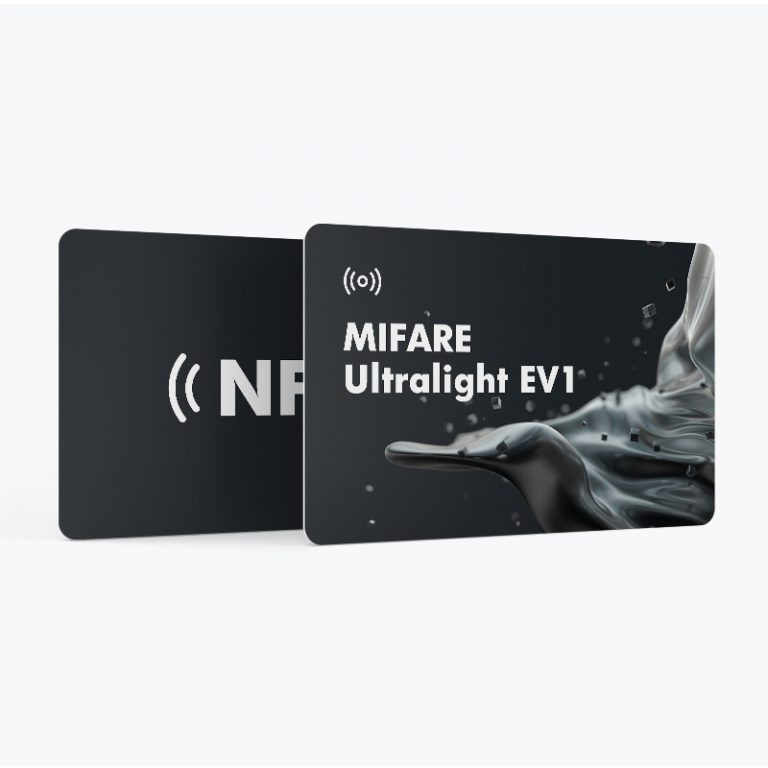
 The physical dimensions of these RFID business cards typically measure 85.6mm × 54mm × 0.76mm (standard credit card size), with the RFID inlay embedded within various materials including plastic, metal, or sustainable wood composites. The chips support data transfer speeds up to 424 kbit/s and utilize ISO/IEC 14443 Type A communication
RFID (Radio Frequency Identification) business cards represent the next evolution in professional networking tools. These smart cards contain embedded RFID chips that store digital contact information, which can be wirelessly transmitted to compatible devices. Unlike traditional cards, RFID business cards enable instant, seamless information exchange with a simple tap or wave. My first encounter with this technology came when a startup founder handed me what looked like a standard business card, then demonstrated how tapping it against my smartphone instantly transferred his complete contact details, portfolio links, and even a calendar scheduling link. The seamless experience felt like magic compared to the clumsy exchange of paper cards I was accustomed to.
## Technical Specifications and Capabilities
RFID business cards typically utilize high-frequency (HF) RFID technology operating at 13.56 MHz, which is the same frequency used by contactless payment systems and many access control cards. The embedded chips commonly include models such as:
**NTAG213**: 144 bytes memory, 26mm communication range
**NTAG215**: 504 bytes memory, 26mm communication range
**NTAG216**: 888 bytes memory, 26mm communication range
**MIFARE Classic 1K**: 1024 bytes memory, 10cm maximum range
The physical dimensions of these RFID business cards typically measure 85.6mm × 54mm × 0.76mm (standard credit card size), with the RFID inlay embedded within various materials including plastic, metal, or sustainable wood composites. The chips support data transfer speeds up to 424 kbit/s and utilize ISO/IEC 14443 Type A communication
Article Information
This article provides comprehensive insights about RFID technology, focusing on practical applications and industry trends. Updated regularly with latest technical specifications.