# What Is an RFID Card Scanner and How Does It Work?
RFID card scanners are integral to modern identification, access control, and inventory management systems. This article explores the technology behind RFID card scanners, their operational principles, and their diverse applications.
## Understanding RFID Technology
RFID (Radio-Frequency Identification) is a wireless communication technology that uses electromagnetic fields to identify and track tags attached to objects. An RFID system consists of three main components: the tag (or transponder), the reader (or scanner), and the backend database or software.
 ### Components of an RFID System
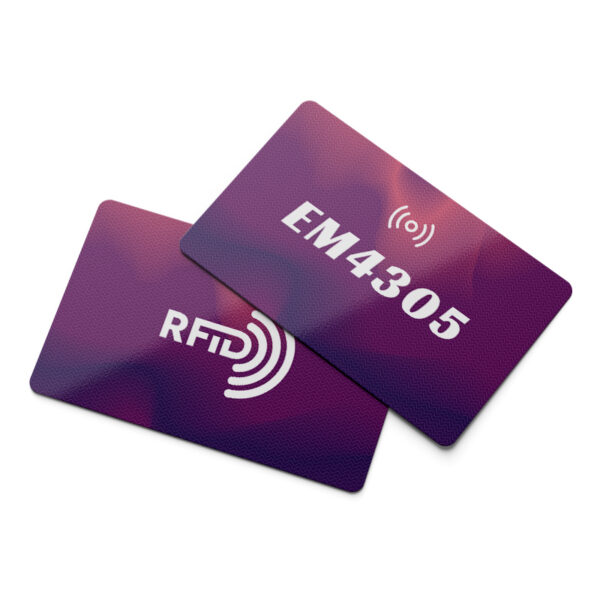
1. **RFID Tags**: These are small devices containing a microchip and an antenna. The chip stores data, while the antenna enables communication with the reader. Tags can be passive (powered by the reader's signal), active (with their own power source), or semi-passive (battery-assisted).
2. **RFID Reader/Scanner**: This device emits radio waves to communicate with tags. It captures data from the tags and transmits it to a computer system for processing.
### Components of an RFID System
1. **RFID Tags**: These are small devices containing a microchip and an antenna. The chip stores data, while the antenna enables communication with the reader. Tags can be passive (powered by the reader's signal), active (with their own power source), or semi-passive (battery-assisted).
2. **RFID Reader/Scanner**: This device emits radio waves to communicate with tags. It captures data from the tags and transmits it to a computer system for processing.
 3. **Antenna**: Often integrated into the reader, the antenna transmits and receives radio signals.
4. **Software/Backend System**: This processes the data collected by the reader, enabling actions like granting access or updating inventory records.
## How Does an RFID Card Scanner Work?
The operation of an RFID card scanner involves a series of steps that enable seamless data exchange between the tag and the reader.
### Step-by-Step Process
1. **Activation**: The RFID card scanner emits a continuous or pulsed radio frequency (RF) signal through its antenna. When an RFID tag enters this RF field, it receives energy from the signal.
2. **Powering the Tag**: For passive tags, the RF energy from the scanner powers the tag's microchip. Active tags use their internal battery.
3. **Data Transmission**: Once powered, the tag modulates the RF signal with its stored data (e.g., a unique identification number) and reflects it back to the scanner.
3. **Antenna**: Often integrated into the reader, the antenna transmits and receives radio signals.
4. **Software/Backend System**: This processes the data collected by the reader, enabling actions like granting access or updating inventory records.
## How Does an RFID Card Scanner Work?
The operation of an RFID card scanner involves a series of steps that enable seamless data exchange between the tag and the reader.
### Step-by-Step Process
1. **Activation**: The RFID card scanner emits a continuous or pulsed radio frequency (RF) signal through its antenna. When an RFID tag enters this RF field, it receives energy from the signal.
2. **Powering the Tag**: For passive tags, the RF energy from the scanner powers the tag's microchip. Active tags use their internal battery.
3. **Data Transmission**: Once powered, the tag modulates the RF signal with its stored data (e.g., a unique identification number) and reflects it back to the scanner.
 4. **Signal Reception**: The scanner's antenna captures the reflected signal and demodulates it to extract the data.
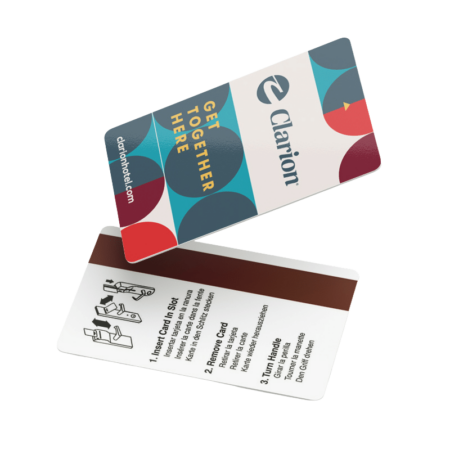 5. **Data Processing**: The scanner sends the extracted data to a connected computer or backend system. The software interprets the data, checks it against a database, and triggers a predefined action (e.g., unlocking a door or logging an entry).
6. **Response**: In some systems, the scanner may send a response back to the tag, such as updating its memory or confirming a transaction.
##
5. **Data Processing**: The scanner sends the extracted data to a connected computer or backend system. The software interprets the data, checks it against a database, and triggers a predefined action (e.g., unlocking a door or logging an entry).
6. **Response**: In some systems, the scanner may send a response back to the tag, such as updating its memory or confirming a transaction.
##
### Components of an RFID System
1. **RFID Tags**: These are small devices containing a microchip and an antenna. The chip stores data, while the antenna enables communication with the reader. Tags can be passive (powered by the reader's signal), active (with their own power source), or semi-passive (battery-assisted).
2. **RFID Reader/Scanner**: This device emits radio waves to communicate with tags. It captures data from the tags and transmits it to a computer system for processing.
3. **Antenna**: Often integrated into the reader, the antenna transmits and receives radio signals.
4. **Software/Backend System**: This processes the data collected by the reader, enabling actions like granting access or updating inventory records.
## How Does an RFID Card Scanner Work?
The operation of an RFID card scanner involves a series of steps that enable seamless data exchange between the tag and the reader.
### Step-by-Step Process
1. **Activation**: The RFID card scanner emits a continuous or pulsed radio frequency (RF) signal through its antenna. When an RFID tag enters this RF field, it receives energy from the signal.
2. **Powering the Tag**: For passive tags, the RF energy from the scanner powers the tag's microchip. Active tags use their internal battery.
3. **Data Transmission**: Once powered, the tag modulates the RF signal with its stored data (e.g., a unique identification number) and reflects it back to the scanner.
4. **Signal Reception**: The scanner's antenna captures the reflected signal and demodulates it to extract the data.
5. **Data Processing**: The scanner sends the extracted data to a connected computer or backend system. The software interprets the data, checks it against a database, and triggers a predefined action (e.g., unlocking a door or logging an entry).
6. **Response**: In some systems, the scanner may send a response back to the tag, such as updating its memory or confirming a transaction.
##
Frequently Asked Questions
What is the typical range of RFID systems?
RFID systems vary in range from a few centimeters (HF/NFC) up to 15 meters (UHF systems), depending on frequency and antenna design.
How secure are RFID access control systems?
Modern RFID systems employ 128-bit or 256-bit encryption, mutual authentication, and secure key storage to prevent unauthorized access.