# White RFID Card: The Ultimate Guide to Understanding and Utilizing This Essential Technology
## What Are White RFID Cards and Why Are They So Important?
White RFID cards have become an integral part of modern access control, identification, and payment systems worldwide. As a blank, programmable card that utilizes Radio Frequency Identification (RFID) technology, it serves as a versatile platform for countless applications. My first encounter with a white RFID card was during my university years when our campus upgraded to a new security system. The smooth, white card felt futuristic in my hand, and the simple act of tapping it against a reader to access the library or dormitory never ceased to amaze me. This personal experience ignited a lasting fascination with the seamless interaction between humans and technology that RFID enables.
The true beauty of the white RFID card lies in its blank-slate nature. Unlike pre-printed cards, it offers organizations complete customization freedom. I've witnessed companies transform these plain cards into powerful brand ambassadors by adding logos, employee photos, and specific encoding that aligns perfectly with their operational workflows. The process of watching a generic white card become a personalized access key is a testament to the flexibility of this technology.
## The Technical Anatomy of a White RFID Card
To truly appreciate the white RFID card, one must understand its technical composition. At its core, the card consists of several layers:
1. **PVC Substrate**: Most white RFID cards use a durable Polyvinyl Chloride (PVC) core, typically 0.76mm to 0.84mm thick, providing the standard CR80 size (85.6mm × 54mm × 0.76mm).
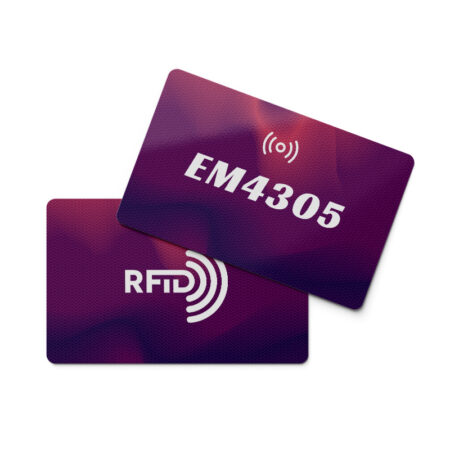 2. **RFID Inlay**: Embedded within the card is the RFID inlay, which contains the antenna and microchip. The positioning of this inlay is crucial—it must be precisely placed to ensure consistent read performance.
3. **Protective Overlay**: A clear protective layer shields the printed surface and internal components from wear and tear.
2. **RFID Inlay**: Embedded within the card is the RFID inlay, which contains the antenna and microchip. The positioning of this inlay is crucial—it must be precisely placed to ensure consistent read performance.
3. **Protective Overlay**: A clear protective layer shields the printed surface and internal components from wear and tear.

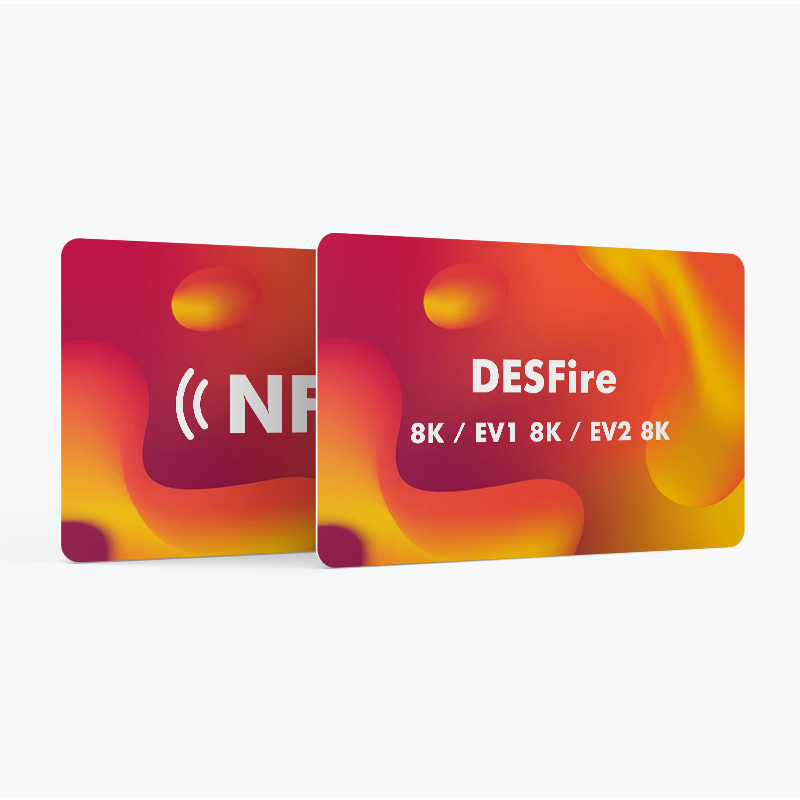
 The RFID technology within these cards typically operates at three main frequencies:
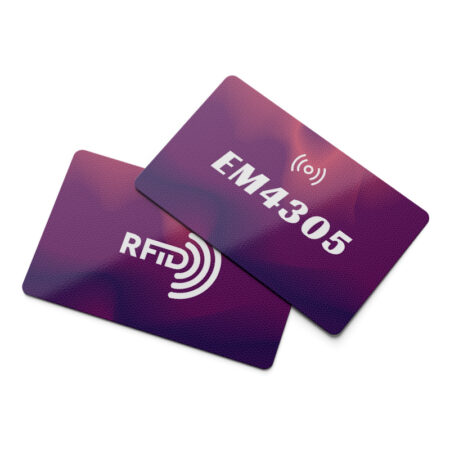 - **Low Frequency (LF)**: 125 kHz, commonly used for access control and animal identification
- **High Frequency (HF)**: 13.56 MHz, the standard for NFC applications, payment systems, and most access control
- **Ultra-High Frequency (UHF)**: 860-960 MHz, used for inventory tracking and supply chain management
- **Low Frequency (LF)**: 125 kHz, commonly used for access control and animal identification
- **High Frequency (HF)**: 13.56 MHz, the standard for NFC applications, payment systems, and most access control
- **Ultra-High Frequency (UHF)**: 860-960 MHz, used for inventory tracking and supply chain management
2. **RFID Inlay**: Embedded within the card is the RFID inlay, which contains the antenna and microchip. The positioning of this inlay is crucial—it must be precisely placed to ensure consistent read performance.
3. **Protective Overlay**: A clear protective layer shields the printed surface and internal components from wear and tear.
The RFID technology within these cards typically operates at three main frequencies:
- **Low Frequency (LF)**: 125 kHz, commonly used for access control and animal identification
- **High Frequency (HF)**: 13.56 MHz, the standard for NFC applications, payment systems, and most access control
- **Ultra-High Frequency (UHF)**: 860-960 MHz, used for inventory tracking and supply chain management
Frequently Asked Questions
What is the typical range of RFID systems?
RFID systems vary in range from a few centimeters (HF/NFC) up to 15 meters (UHF systems), depending on frequency and antenna design.
How secure are RFID access control systems?
Modern RFID systems employ 128-bit or 256-bit encryption, mutual authentication, and secure key storage to prevent unauthorized access.